
Can Water-Damaged Hardwood Floors Be Repaired?
A spilled glass is one thing. A leaking appliance, burst pipe, roof leak, or flooded room is another. When hardwood flooring absorbs a significant amount of water, homeowners often assume the entire floor has to come out.
Fortunately, that is not always the case. Water-damaged hardwood floors can often be repaired when the problem is caught early and the boards remain structurally sound. The right solution depends on how long the floor stayed wet, how deeply moisture penetrated, and whether the wood has warped, stained, or developed mold.
Here is how to tell whether your hardwood can be saved, what repairs may involve, and when replacement becomes the smarter investment.
What Happens When Hardwood Flooring Gets Wet?
Hardwood naturally absorbs and releases moisture as indoor conditions change. Small fluctuations are normal. The trouble begins when flooring is exposed to more moisture than it can release.
As boards absorb water, they expand. That movement can cause several visible problems:
Cupping, where the edges of boards rise higher than the centers
Crowning, where the center of a board rises above its edges
Buckling or boards pulling away from the subfloor
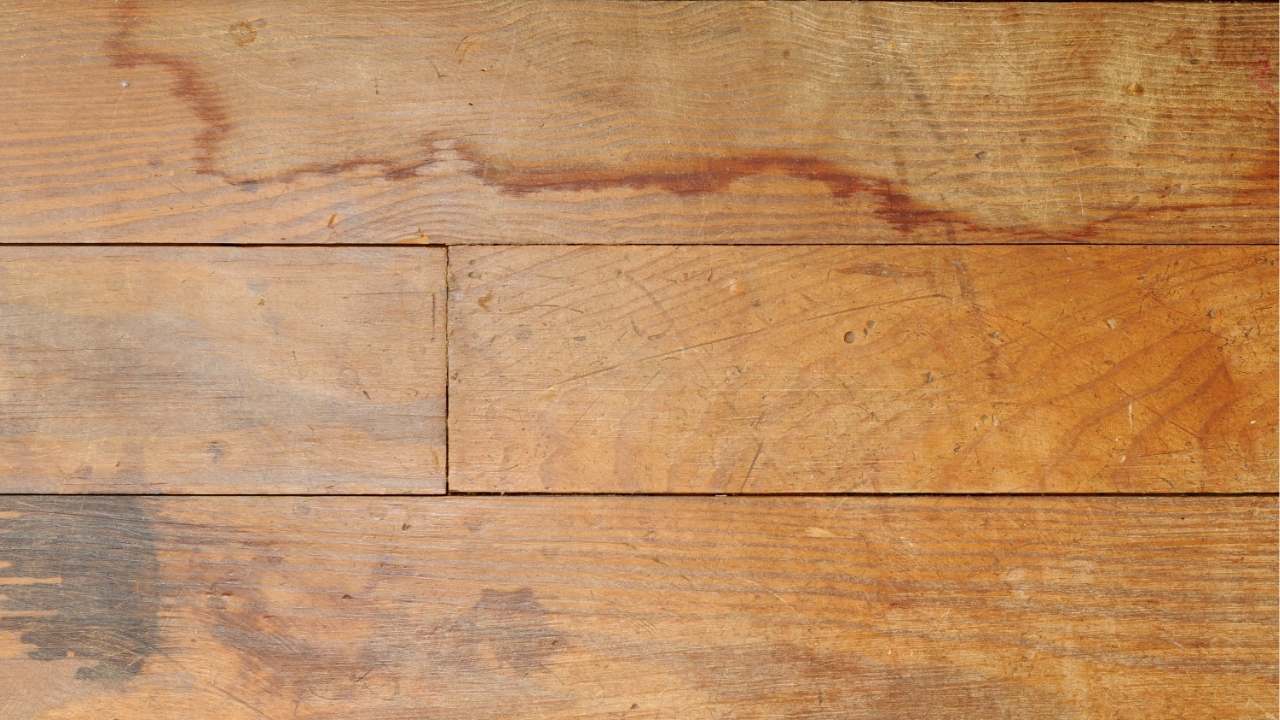
Dark stains or discoloration
Gaps that appear after the flooring dries
Peeling or damaged finishes
Soft or weakened areas
Not every symptom means the flooring is permanently ruined. Mild cupping, for example, may improve after the moisture source is eliminated and the floor is thoroughly dried.
The key is identifying what is happening below the surface. A floor may feel dry to the touch while moisture remains trapped in the boards or subfloor.
Can Water-Damaged Hardwood Actually Be Saved?
In many cases, yes.
The first priority is stopping the source of the water. Repairing the visible floor without addressing the leak only sets the stage for the same damage to happen again.
After the source is controlled, the flooring needs time to dry properly. Professionals may use moisture meters to compare affected boards with dry areas of the home. Depending on the severity of the damage, dehumidifiers, air movers, and other drying equipment may also be used.
Once moisture levels stabilize, the condition of the boards can be assessed more accurately.
Minor damage may require little more than refinishing. Moderate damage might call for targeted board replacement followed by sanding and refinishing to blend the repaired section with the surrounding floor.
Professional hardwood repairs can often preserve far more of the original flooring than homeowners expect, especially when damage is limited to one room or a small section near a leak.
Timing matters. The longer wood stays wet, the greater the chance that swelling, staining, subfloor deterioration, or microbial growth will turn a manageable repair into a larger project.
Repair or Replace? How Professionals Make the Call
There is no single rule that determines whether a wet hardwood floor should be repaired or replaced. A proper assessment considers several factors together.
How Long Was the Floor Wet?
A small leak discovered quickly is very different from standing water that remained unnoticed for several days. Longer exposure gives moisture more time to penetrate the flooring and subfloor.
How Much of the Floor Is Damaged?
Localized damage is often a strong candidate for repair. If water has affected most of a room or traveled beneath flooring into adjoining spaces, replacement may become more practical.
Are the Boards Structurally Sound?
Slightly warped boards may recover or be refinished after drying. Severely buckled, cracked, loose, or softened boards usually need replacement.
What Condition Is the Subfloor In?
The hardwood itself is only part of the equation. Moisture trapped underneath can weaken the subfloor and create conditions for mold.
That is why simply sanding down warped boards immediately after a leak can be a mistake. If the wood has not reached a stable moisture level, additional movement may occur after refinishing.
For businesses, offices, retail spaces, and other high-traffic properties, consulting a commercial flooring contractor in Portland Maine can also help determine whether localized restoration or broader replacement makes more financial sense.
What Does the Hardwood Floor Repair Process Involve?
The exact process depends on the damage, but professional restoration generally follows a logical sequence.
First, the moisture source must be identified and corrected. Next, the affected flooring and subfloor are evaluated and dried. Moisture readings help determine when the wood has stabilized enough for repair work to begin.
From there, the flooring professional may:
Remove boards that cannot be saved
Install matching replacement boards
Correct minor surface irregularities
Sand damaged or uneven areas
Blend repaired sections with surrounding flooring
Apply stain when necessary
Refinish and seal the surface
Matching existing hardwood can be one of the more challenging parts of the project, particularly in older homes. Wood species, plank dimensions, grain, age, stain, and finish can all influence the final appearance.
An experienced Portland flooring specialist can evaluate these details before work begins and recommend an approach that minimizes obvious transitions between old and repaired sections.
Case Study: A Leak That Looked Worse Than It Was
Consider a homeowner who discovers a slow dishwasher leak after noticing several cupped hardwood boards in the kitchen. At first glance, replacing the entire kitchen floor seems inevitable.
After the leak is repaired, moisture testing shows that most of the hardwood remains structurally stable. Drying equipment is used to reduce moisture in the affected area and subfloor. Once the flooring stabilizes, only a handful of permanently damaged boards need replacement. The surrounding floor is then sanded and refinished to create a consistent appearance.
Instead of paying for a complete replacement, the homeowner preserves most of the existing hardwood while addressing the underlying moisture problem.
When Is Full Replacement the Better Choice?
Repair is valuable when it preserves a floor without compromising its appearance or performance. But there are situations where replacement is the safer long-term decision.
Replacement may be recommended when boards are extensively buckled, the subfloor has suffered serious deterioration, mold is present across a large area, or contaminated floodwater has penetrated the flooring system.
It can also make sense when damage is so widespread that replacing individual boards, sanding, staining, and refinishing would approach the cost of installing a new floor.
This is where a professional assessment becomes valuable. The cheapest immediate fix is not necessarily the least expensive option over the next several years.
Do Not Wait to Assess Water-Damaged Hardwood
Water damage does not automatically mean your hardwood floor is lost. With fast action, proper drying, and a careful inspection, many floors can be restored without complete replacement.
What matters most is finding out how far the moisture traveled and whether the flooring and subfloor remain structurally sound. Surface appearance alone cannot answer those questions.
If your hardwood floor has been exposed to a leak, flood, or standing water, schedule a professional flooring assessment as soon as possible. The sooner the damage is evaluated, the better your chances of saving more of the existing floor, and avoiding a much more expensive repair later.